The Ultimate Guide to Veneers vs Crowns
July 8, 2026
What Is the Difference Between Veneers and Crowns?
When comparing veneers vs crowns, here is the short answer:
| Veneers | Crowns | |
|---|---|---|
| What they cover | Front surface only | Entire tooth |
| Thickness | ~1 mm | ~2 mm |
| Enamel removed | 0.3–0.7 mm (front only) | 1.5–2 mm (all sides) |
| Primary purpose | Cosmetic improvement | Structural restoration |
| Best for | Healthy teeth with cosmetic concerns | Damaged, decayed, or root-canal-treated teeth |
| Insurance coverage | Rarely covered | Often partially covered |
| Lifespan | 10–20 years | 15–30 years |
Choosing between veneers vs crowns is one of the most common questions patients ask before a smile makeover — and the answer almost always comes down to one thing: how healthy is the tooth underneath?
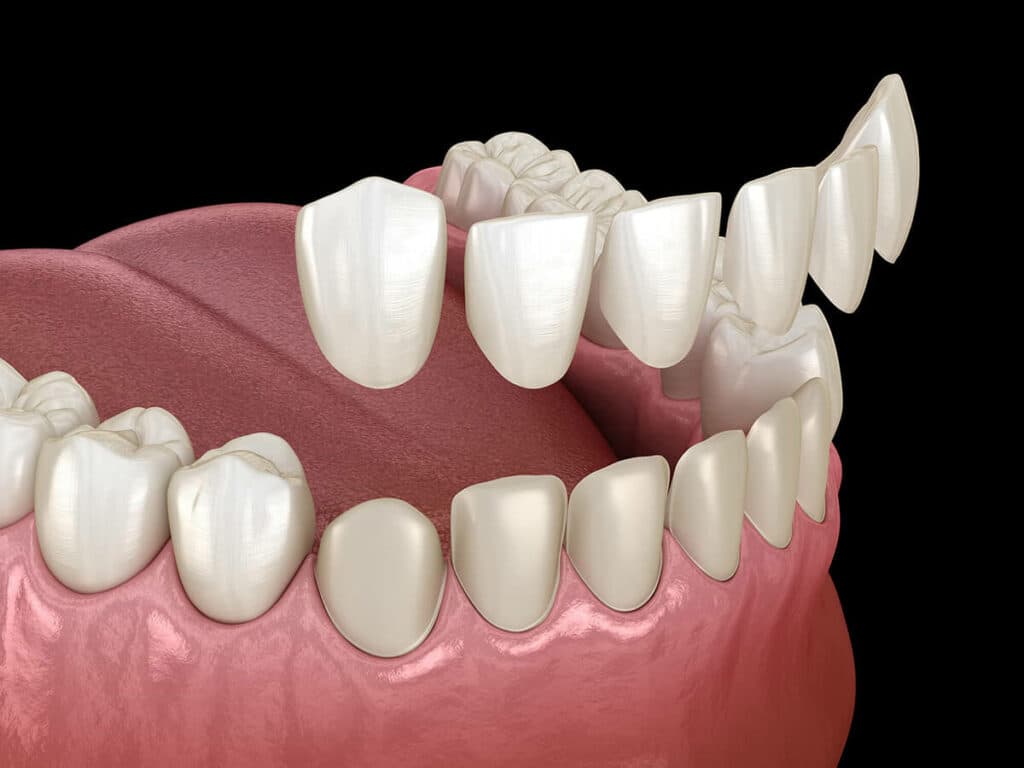
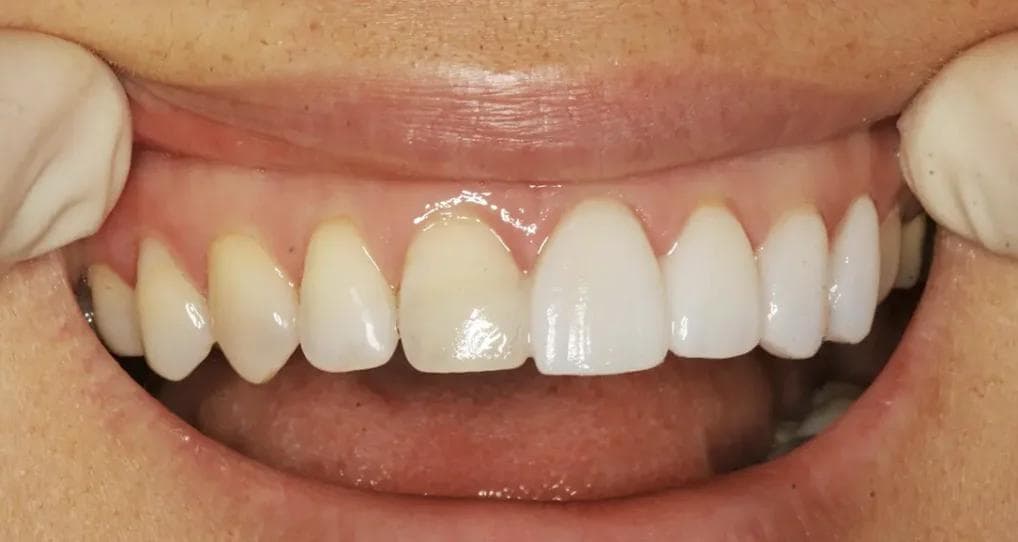
Veneers are thin porcelain or composite shells bonded to the front of a tooth. They are a conservative, cosmetic solution for chips, stains, gaps, or mild misalignment on structurally sound teeth.
Crowns are full-coverage caps that encase the entire tooth. They restore strength, shape, and function when a tooth has been significantly damaged by decay, fracture, or root canal treatment.
Both can look completely natural. Both use similar materials. But they are not interchangeable — and choosing the wrong one can mean unnecessary tooth reduction or a restoration that fails too soon.
I’m Dr. Nina Izhaky, a graduate of New York University College of Dentistry and the founder of Tribeca Dental Studio, where I’ve helped countless patients navigate exactly this decision as part of comprehensive cosmetic and restorative care. My approach to veneers vs crowns is always clinical first — preserving as much natural tooth structure as possible while delivering results that genuinely last.
No-Prep Veneers in NYC: A Specialty at Tribeca Dental Studio
Tribeca Dental Studio also offers no-prep veneers for carefully selected patients who want a highly conservative cosmetic upgrade with little to no enamel reduction. Dr. Nina Izhaky and her team excel at this precise, detail-driven technique, combining advanced smile design with a preservation-first approach so patients can achieve a natural-looking transformation while keeping as much healthy tooth structure as possible.
For patients searching for the best no-prep veneers in NYC, our Tribeca team is known for creating refined, lifelike results that enhance the smile without an overdone or bulky appearance. Not every tooth is a candidate for no-prep veneers, but when the bite, tooth position, and cosmetic goals are aligned, this can be one of the most elegant and conservative veneer options available.
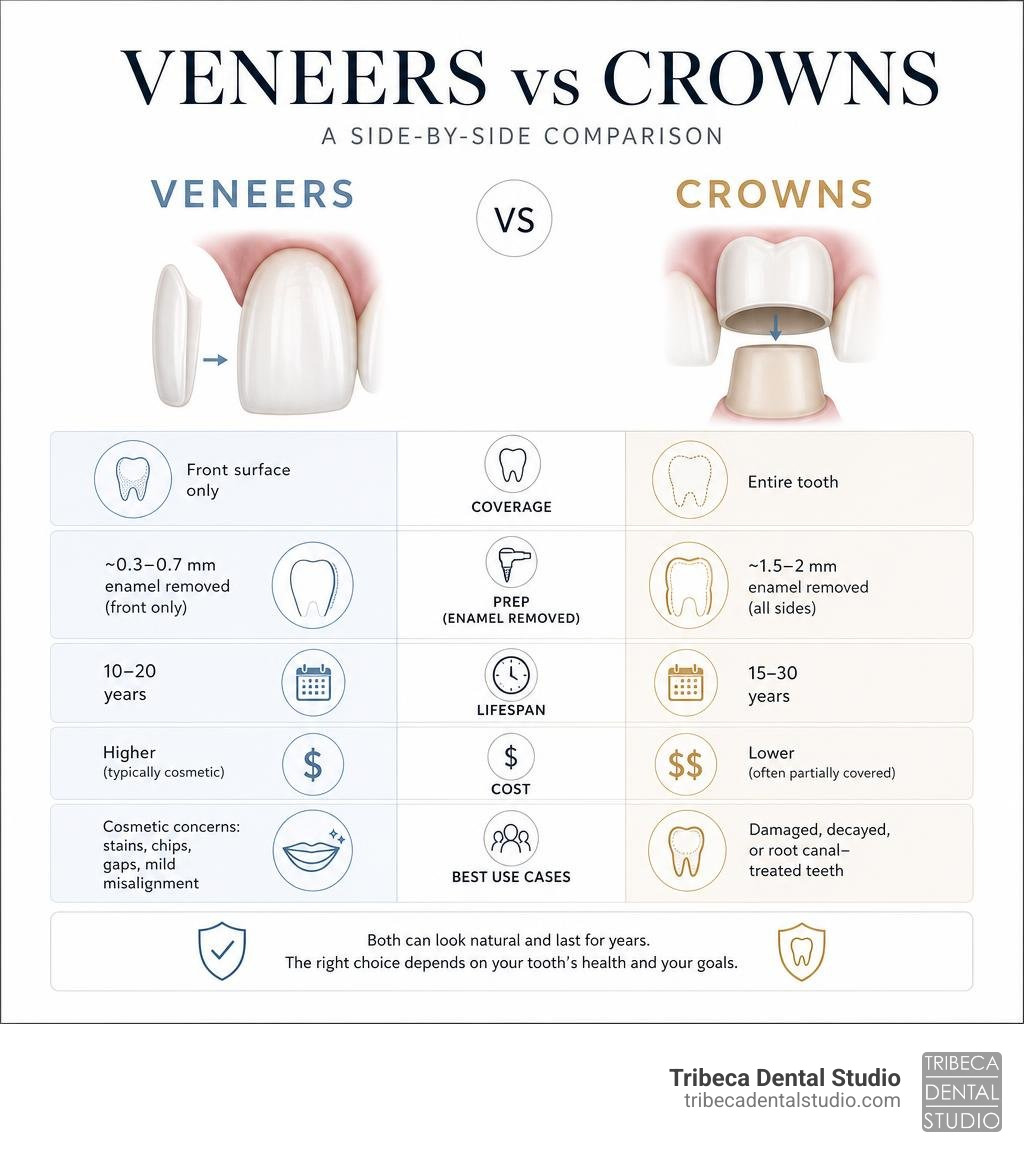
Veneers vs crowns vocab explained:
Veneers vs Crowns: The Fundamental Differences
Understanding the fundamental differences between veneers vs crowns is crucial for anyone looking to enhance their smile. While both treatments can dramatically improve the aesthetics of your teeth, they serve different primary purposes and cover different amounts of the tooth.
A veneer is a thin laminate designed mainly to mask imperfections on the visible face of the tooth. Think of it like a custom-made, high-tech artificial fingernail, but made of beautiful, medical-grade porcelain. In contrast, a dental crown is a robust, 360-degree helmet that wraps around the entire tooth structure down to the gumline. It protects and reinforces a tooth that is structurally compromised.
When deciding which is best for you, we look closely at the balance between structural integrity and cosmetic goals. To explore the wider world of aesthetic enhancements, you can learn more about our cosmetic dentistry services. To help you visualize the core trade-offs, we have broken down the comparison in detail:
| Feature | Veneers | Crowns |
|---|---|---|
| Coverage Area | Only the front face (and slightly over the biting edge) | Full 360-degree encapsulation |
| Material Thickness | Extremely thin (approx. 0.5 mm to 1.0 mm) | Thicker protective barrier (approx. 1.5 mm to 2.0 mm) |
| Enamel Reduction | Conservative (0.3 mm to 0.7 mm on the front only) | Substantial (1.5 mm to 2.0 mm on all sides) |
| Primary Indication | Discoloration, minor chips, small gaps, mild crowding | Severe decay, fractures, root canal therapy, heavy wear |
| Structural Support | None (relies entirely on the strength of the underlying tooth) | High (reinforces and holds the remaining tooth structure together) |
| Reversibility | Irreversible (due to enamel removal, though minimal) | Irreversible (requires permanent alteration of the tooth shape) |
For a broader overview of how these two treatment types compare in everyday scenarios, you can also read the Healthline breakdown of veneers vs crowns.
What is a Dental Veneer?
A dental veneer is a custom-fabricated shell of dental ceramic or composite resin that is permanently bonded to the front surface of a tooth. Its primary objective is to elevate your smile’s appearance by correcting aesthetic issues like severe tetracycline staining, minor chips, shape irregularities, or small gaps.
Because they are so thin, veneers require very little alteration to your natural tooth. They rely on a strong, chemical bond to your natural enamel to stay in place. This makes them the gold standard for cosmetic smile makeovers when the underlying teeth are healthy, strong, and decay-free. For those living in New York City looking to transform their smile, you can find detailed information about veneers in NYC, including the custom design process we use to achieve incredibly natural results.
What is a Dental Crown?
A dental crown, often referred to as a “cap,” is a custom restoration designed to fully encase a damaged tooth. Unlike a veneer, which only changes the face of the tooth, a crown replaces the entire outer layer of enamel. It acts as a protective shield, absorbing the heavy forces of chewing and biting to prevent a weakened tooth from cracking or splitting.
Crowns are the preferred choice when a tooth has been structurally compromised by large cavities, recurrent decay around old fillings, or fractures. They are also standard protocol to protect teeth that have undergone root canal therapy, as these teeth naturally become more brittle over time. If you need to restore a damaged tooth, you can learn more about our high-quality Manhattan dental crowns.
Tooth Structure and Preparation: What to Expect
The amount of natural tooth structure that must be removed is one of the most important factors in the veneers vs crowns debate. This is not just a matter of comfort during the procedure; it has long-term implications for the health and “retreatability” of your teeth.
As a rule of thumb, conservative dentistry is always the best approach. Preserving as much of your natural enamel as possible keeps the tooth stronger and leaves more options open for the future. However, if a tooth is already broken down, trying to place a veneer instead of a crown is a recipe for premature failure. In some cases, a compromise between the two—such as a conservative onlay—might be the ideal middle ground. If you are curious about intermediate options, you can read more about choosing an onlay over a full crown.
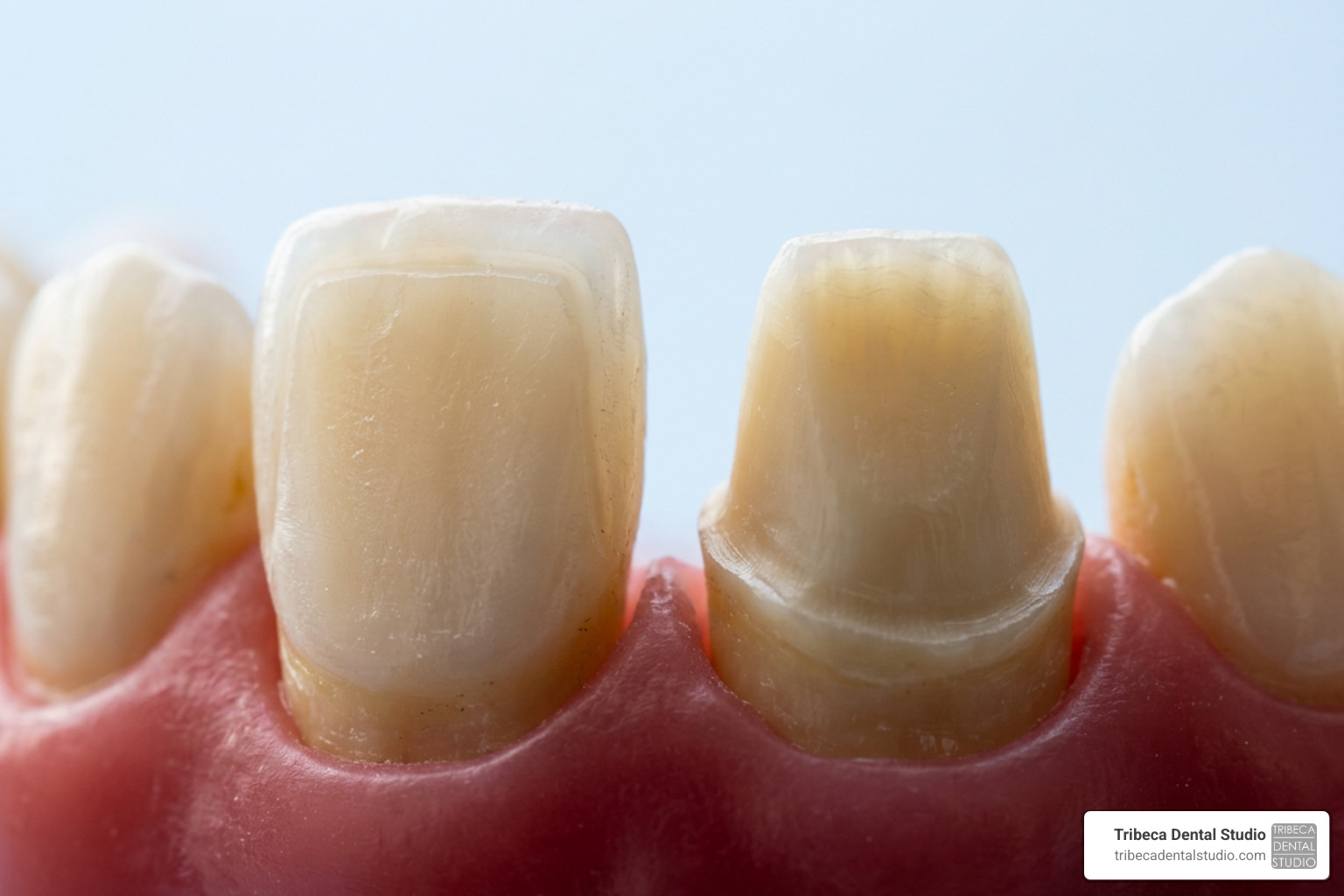
The Veneer Preparation Process
Getting a porcelain veneer is a highly precise and minimally invasive process. During the preparation appointment, we gently shave away a microscopic layer of enamel from the front surface of the tooth—usually between 0.3 mm and 0.7 mm. To put that in perspective, 0.5 mm is about the thickness of a contact lens.
This step is essential because it creates a slightly rough surface for the adhesive to grab onto and ensures the final veneer sits flush with your surrounding teeth, avoiding a bulky or fake appearance. Because the preparation is so shallow, it is often performed with minimal local anesthesia, and some patients experience little to no post-operative sensitivity. In some cases, we can even utilize “no-prep” or ultra-thin veneers, which require virtually no enamel removal at all.
The Crown Preparation Process
Preparing a tooth for a dental crown is a more extensive procedure. Because the crown must fully encase the tooth and withstand heavy biting pressures, we must reduce the tooth by approximately 1.5 mm to 2.0 mm on all sides, including the biting surface. This represents a significantly higher volume of tooth reduction compared to a veneer.
Any active decay is thoroughly removed during this process. If a large portion of the natural tooth is missing due to decay or a fracture, we will first perform a “core buildup” using a durable composite material to create a sturdy foundation for the crown. Because this process goes deeper into the tooth structure, local anesthesia is always used to ensure you remain completely comfortable. If you are recovering from a deep cavity, you can read more about what to expect when getting a dental crown after a filling.
Durability, Lifespan, and Strength Comparison
When investing in your smile, you want to know that your restorations are built to last. Both veneers and crowns offer excellent durability, but their survival rates and structural limits differ based on how they are used and the forces they must endure.
An important lifestyle factor to consider is bruxism (teeth grinding or clenching). Studies show that bruxism increases the risk of veneer fracture by three to four times compared to patients who do not grind their teeth. To protect your investment, we highly recommend wearing a custom night guard to cushion your restorations from these destructive nighttime forces. For a deeper look into the long-term performance of these restorations, read this guide on veneers vs crowns durability.
Longevity of Veneers vs Crowns
In terms of pure survival rates, both options perform exceptionally well when planned correctly:
- Veneers: Porcelain veneers have an impressive 93% survival rate at 10 years and a 91% survival rate at 20 years. When they do fail, the most common reason is minor fracturing or chipping of the ceramic edge.
- Crowns: A 2017 systematic review analyzing over 34,000 dental crowns found a median survival time of 15 years, with all-ceramic and gold crowns showing the highest long-term survival rates.
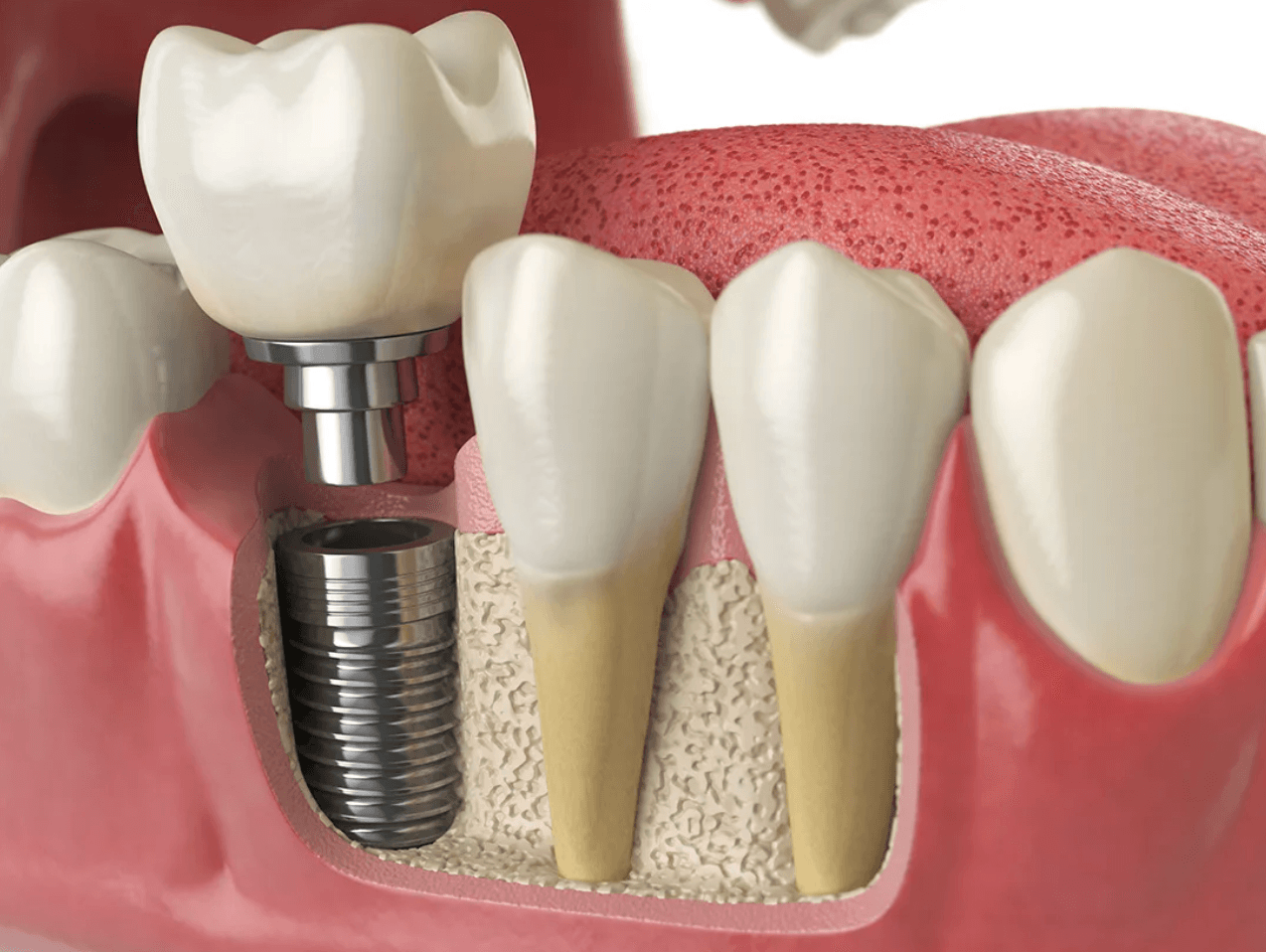
It is worth noting that while crowns can sometimes last up to 30 years with meticulous oral hygiene, a root-canal-treated premolar or molar left without a crown has a fracture rate five to six times higher within the first year after treatment compared to one restored with a crown. To understand how crowns fit into the broader landscape of dental restorations, you can read our comparison of crowns vs bridges vs implants.
Material Strength and Bite Forces
The materials we use today are stronger and more lifelike than ever before. For posterior teeth (molars and premolars), which endure crushing forces of up to 200 pounds of pressure, we often use zirconia. Zirconia is a high-strength ceramic boasting a flexural strength of 900 to 1,200 MPa, making it virtually indestructible.
For front teeth, where natural translucency and light reflection are the top priorities, we frequently select lithium disilicate (often known as E-max). With a flexural strength of around 400 MPa, lithium disilicate is more than strong enough to handle front-tooth biting forces while offering unmatched aesthetic realism.
Pros and Cons of Each Restoration
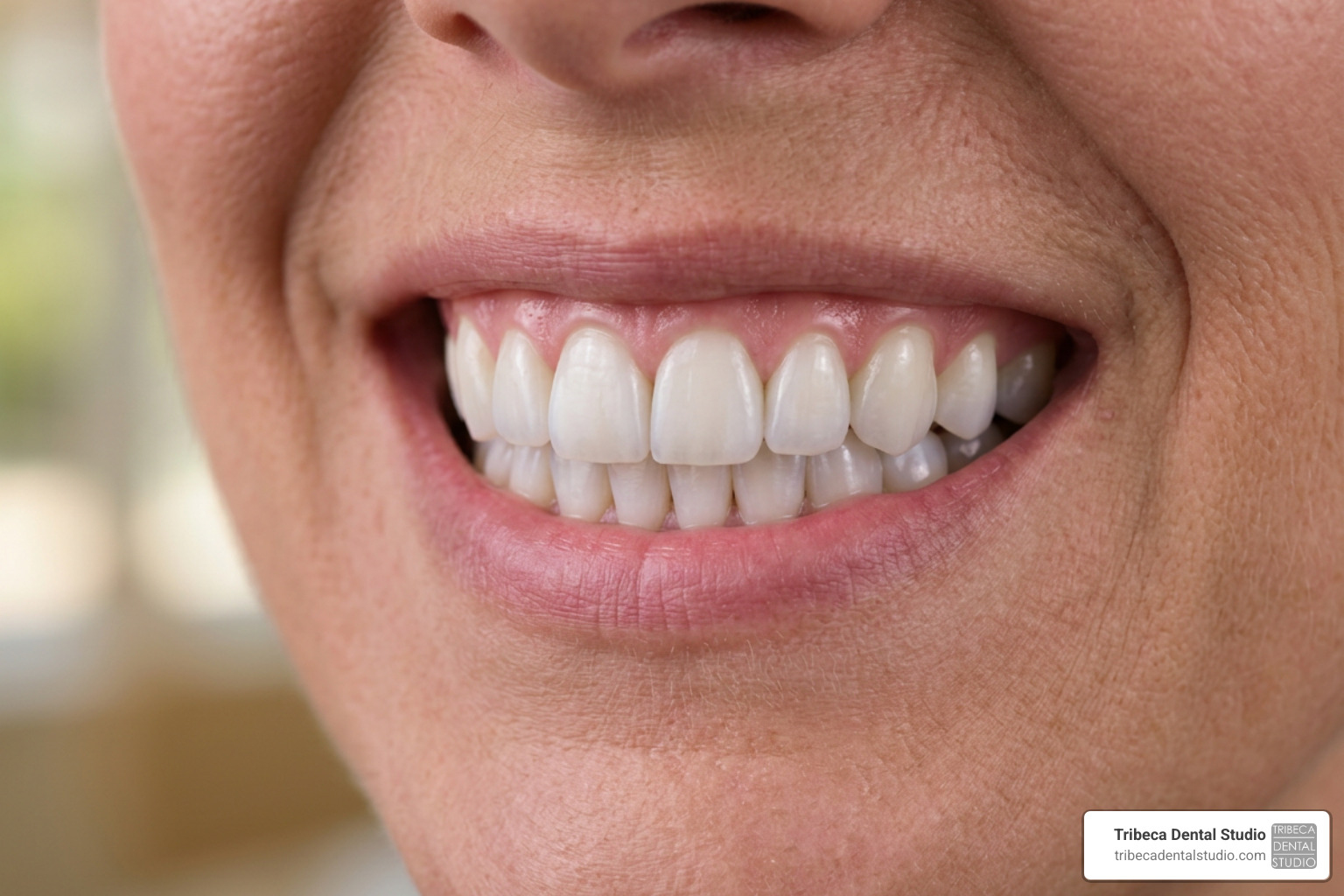
Porcelain Veneers
- Pros:
- Extremely conservative; preserves the maximum amount of natural enamel.
- Highly stain-resistant; porcelain does not discolor from coffee, tea, or red wine.
- No dark margins at the gumline over time, as the restoration sits flush with the natural tooth.
- Achieves a beautiful, highly natural “illusion of alignment” for minor cosmetic flaws.
- Cons:
- Provides no structural reinforcement for weakened or cracked teeth.
- Relies entirely on healthy enamel for bonding; cannot be placed on heavily decayed teeth.
- Irreversible process, even though enamel removal is minimal.
Dental Crowns
- Pros:
- Provides 360-degree structural support to save highly damaged teeth.
- Protects brittle, root-canal-treated teeth from catastrophic fractures.
- Improves chewing comfort and corrects bite misalignments.
- Highly predictable, long-term survival rates under heavy biting forces.
- Cons:
- Requires significant removal of healthy tooth structure on all sides.
- More invasive procedure, which can sometimes lead to temporary post-operative sensitivity.
- In some cases, a faint dark line may become visible near the gumline if the gums recede over time (primarily with porcelain-fused-to-metal crowns, though this is avoided with modern all-ceramic options).
Choosing Between Veneers vs Crowns for Your Smile
The decision of whether to choose a veneer or a crown should always be clinical first and cosmetic second. If a tooth is healthy, structurally sound, and simply has cosmetic flaws, a veneer is almost always the wiser, more conservative choice.
However, if the tooth has lost more than half of its natural structure, has deep cracks extending into the dentin, or has undergone a root canal, a crown is medically necessary to protect the tooth from splitting. If you want to see how modern crowns can rescue heavily damaged teeth while still looking absolutely beautiful, explore how cosmetic crowns transform teeth.
Cost and Insurance Considerations for Veneers vs Crowns
Because veneers and crowns require similar levels of laboratory artistry and clinical expertise, their raw costs are often comparable. However, how dental insurance views them is entirely different:
- Veneers: Because they are classified as an elective cosmetic procedure, dental insurance plans almost never cover veneers.
- Crowns: Because crowns are classified as major restorative care, insurance plans will frequently cover up to 50% of the cost, provided there is a clear clinical necessity (such as decay or a fracture) documented by X-rays.
To help you navigate these differences and plan your treatment, you can read our guide on dental crown costs and insurance.
Frequently Asked Questions about Veneers and Crowns
Can veneers be used on structurally damaged or root-canal-treated teeth?
No, veneers are not suitable for structurally compromised or root-canal-treated teeth. A root canal removes the tooth’s internal blood supply, causing the remaining dentin to become brittle over time. Without the 360-degree support of a crown, a root-treated tooth is highly susceptible to fracturing under normal chewing forces. A veneer only bonds to the front surface and does not provide the circumferential “ferrule effect” needed to hold a fragile tooth together.
Which option looks more natural, a veneer or a crown?
Both options can look incredibly natural when crafted by a skilled ceramist and placed by an experienced cosmetic dentist. However, veneers often have a slight aesthetic advantage on front teeth. Because they are ultra-thin and sit on top of your natural tooth structure, they allow natural light to pass through the porcelain and reflect off the tooth underneath, perfectly mimicking the translucency of natural enamel.
Can a tooth be upgraded from a veneer to a crown later?
Yes, absolutely. This is a common and highly manageable progression. If a tooth that was restored with a veneer years ago later develops a cavity, suffers a fracture, or requires a root canal, the veneer can easily be removed, and the tooth can be prepared for a full-coverage crown. However, the reverse is not possible; once a tooth has been prepared for a crown, it can never receive a veneer because too much enamel has been removed.
For patients exploring cosmetic and restorative options in the Manhattan area, you can read our local guides:
- Learn about modern crown technologies in the Tribeca Dental Studio NYC crown cost guide.
- View our complete range of general and specialized treatments on our Services page.
Conclusion
At Tribeca Dental Studio, we believe that a truly beautiful smile is built on a foundation of excellent oral health. Led by Dr. Nina Izhaky, our highly experienced team in Tribeca, Manhattan, is dedicated to providing personalized, advanced care that treats you like family.
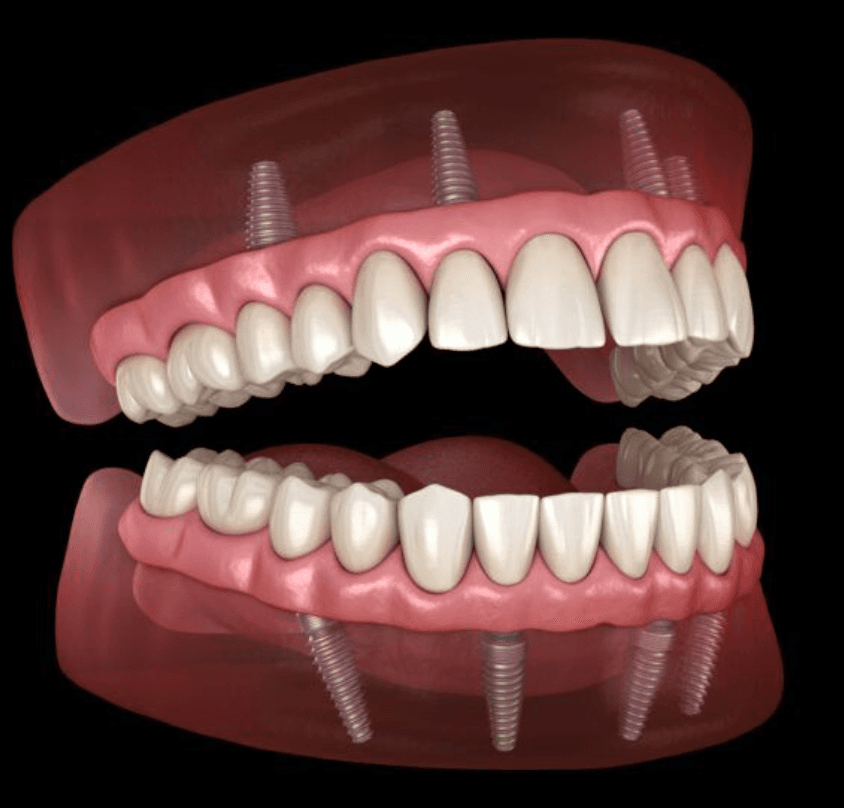
Whether you are looking for subtle cosmetic enhancements with porcelain veneers, durable and lifelike dental crowns, or complex treatments like full-mouth reconstruction, advanced implant dentistry, and zygomatic implant care led by our implant specialist Dr. Sam Morhaim, we are committed to delivering predictable, high-success outcomes. We stand behind the quality of our work and use state-of-the-art technology to ensure your comfort at every step of your journey.
Ready to find out which restoration is perfect for your smile? Schedule a consultation for dental crowns and bridges with our trusted team today!