How to Fix an Overbite Even When Your Teeth Look Completely Straight
August 5, 2026
When Your Smile Looks Perfect but Your Bite Doesn’t
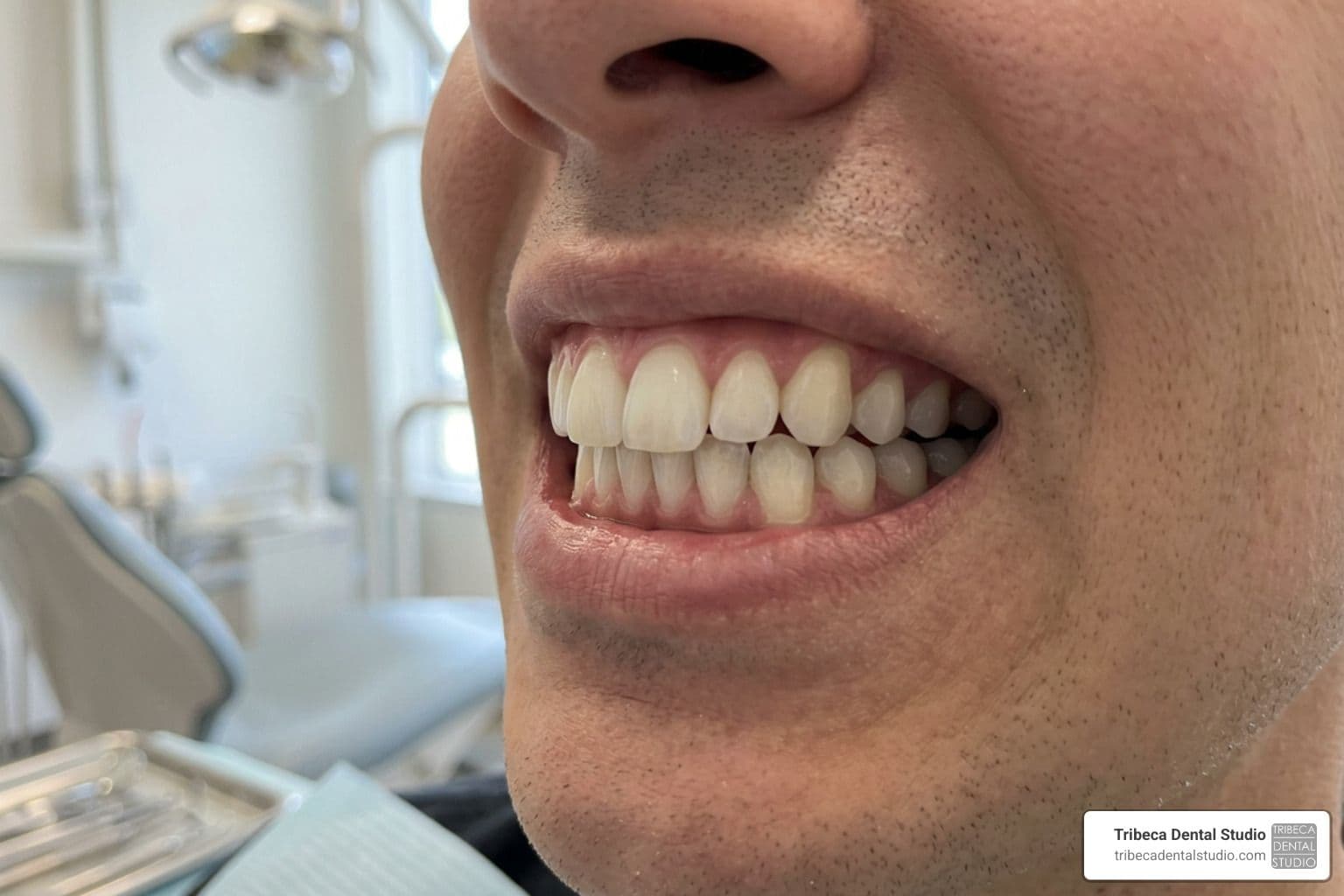
Straight teeth with an overbite is more common than most people realize — and it’s one of the most frequently missed bite problems in dentistry.
Here’s the short answer:
- Yes, you can have perfectly straight-looking teeth and still have a significant overbite. The two are not the same thing.
- Straight teeth describe how your individual teeth look from the front — their alignment and spacing.
- An overbite describes how your upper and lower jaws relate to each other vertically.
- A small overbite of 2 to 4 millimeters is completely normal. Beyond that, it becomes a functional problem — even if your smile looks great in photos.
- Left untreated, an overbite can cause jaw strain, enamel wear, gum irritation, and long-term bite damage.
The tricky part? Many people go years without knowing they have one. Their teeth look fine. Their smile looks fine. But underneath the surface, their bite is working against them.
This guide explains what’s really going on, why it happens, and what you can do about it — including modern options that don’t require traditional metal braces.
I’m Dr. Nina Izhaky, a graduate of NYU College of Dentistry and founder of Tribeca Dental Studio, where I’ve helped many patients with straight teeth with an overbite who were surprised to learn their bite needed attention despite their smile looking great. If you’d like a clear, personalized answer about your own bite, my team and I are here to help.
Can You Have Straight Teeth with an Overbite? Understanding Dental vs. Skeletal Issues
It sounds like a paradox, doesn’t it? When you glance in the mirror or look at photos, your front teeth line up like neatly arranged soldiers. Yet during a routine checkup, your dentist tells you that you have a deep overbite. How can a smile that looks cosmetically flawless actually be sitting on an incorrect bite relationship?
To understand this, we have to look at the structural foundation of your mouth. Dental alignment (how neat individual teeth look in an arch) and functional occlusion (how the top and bottom arches meet when you chew or rest) are two completely different things. You can have beautifully straight dental arches on individual tracks, but if those tracks sit too far over each other vertically, you have a deep vertical bite misalignment.
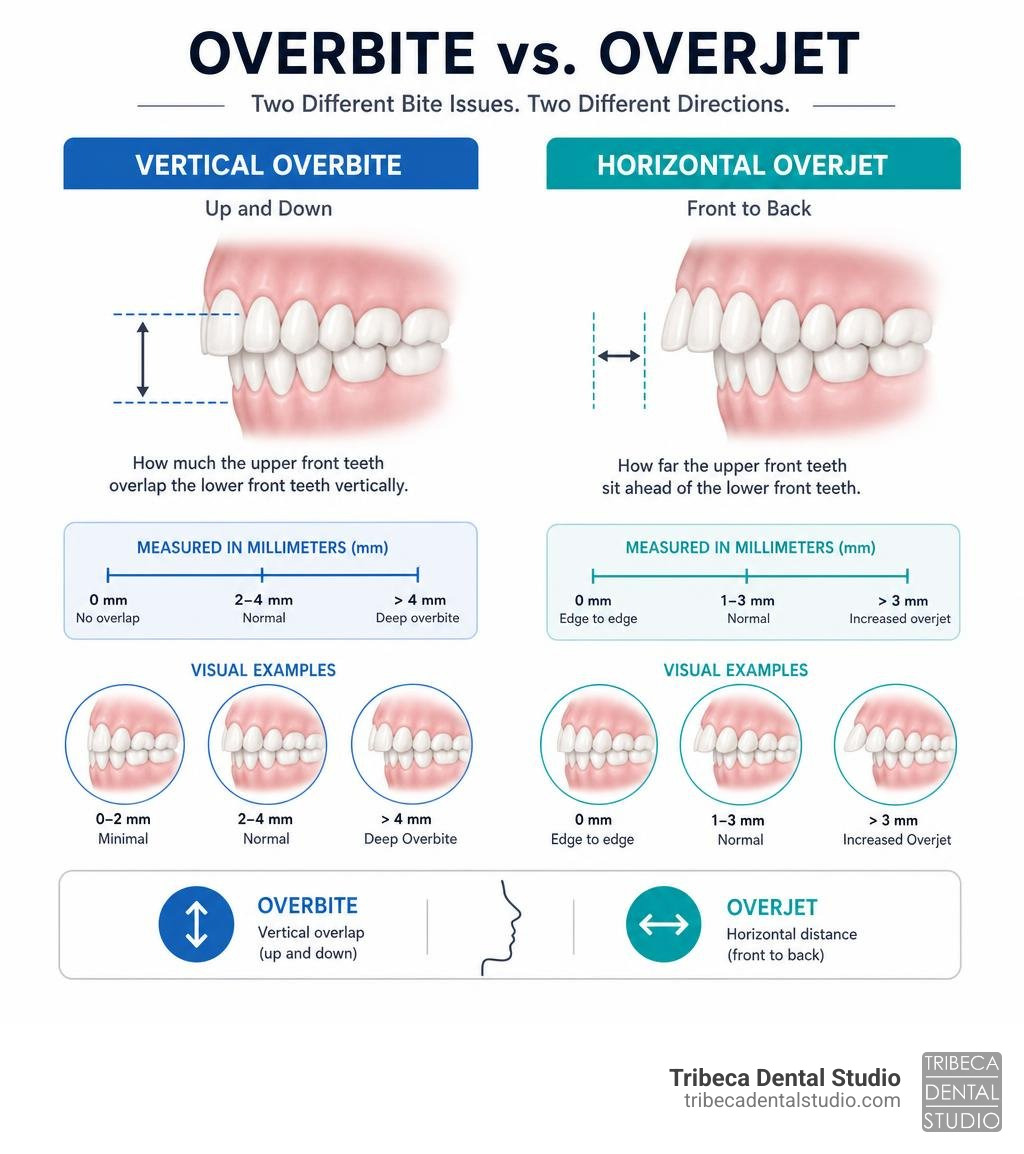
In clinical dentistry, a normal vertical overlap ranges between 2 to 4 millimeters (or about 10% to 30% coverage of your bottom teeth). When the upper front teeth cover more than 30%—and in severe deep bites, 100%—of the lower teeth, it is categorized as a deep overbite.
Orthodontic specialists separate these bite issues into two broad categories:
- Dental Overbite: This occurs when the teeth themselves are tipped, extruded, or angled vertically in a way that causes excessive overlap, while the underlying jaw bones are positioned relatively normally.
- Skeletal Overbite: This occurs when the actual jaw bones are mismatched. Usually, the upper jaw (maxilla) is overdeveloped, or the lower jaw (mandible) is underdeveloped or set too far back toward the neck.
When someone presents with straight teeth with an overbite, they frequently have a skeletal discrepancy or subtle tooth tipping where individual teeth haven’t crowded, but the bite depth remains excessive. Understanding whether your issue is strictly dental or primarily skeletal is the first step in deciding how to treat it. If you’d like to explore how modern bite mapping works, learn more by reading about Overjet (Buck Teeth): What It Is & How To Fix It to compare horizontal and vertical bite dynamics.
Overbite vs. Overjet: Defining the Key Differences
One of the main reasons patients get confused when discussing bite issues is that the terms “overbite” and “overjet” are frequently mixed up in everyday conversation. People often use “overbite” as a catch-all phrase for any bite issue where the top teeth stick out, but in the clinical world, they measure two entirely different geometric dimensions.
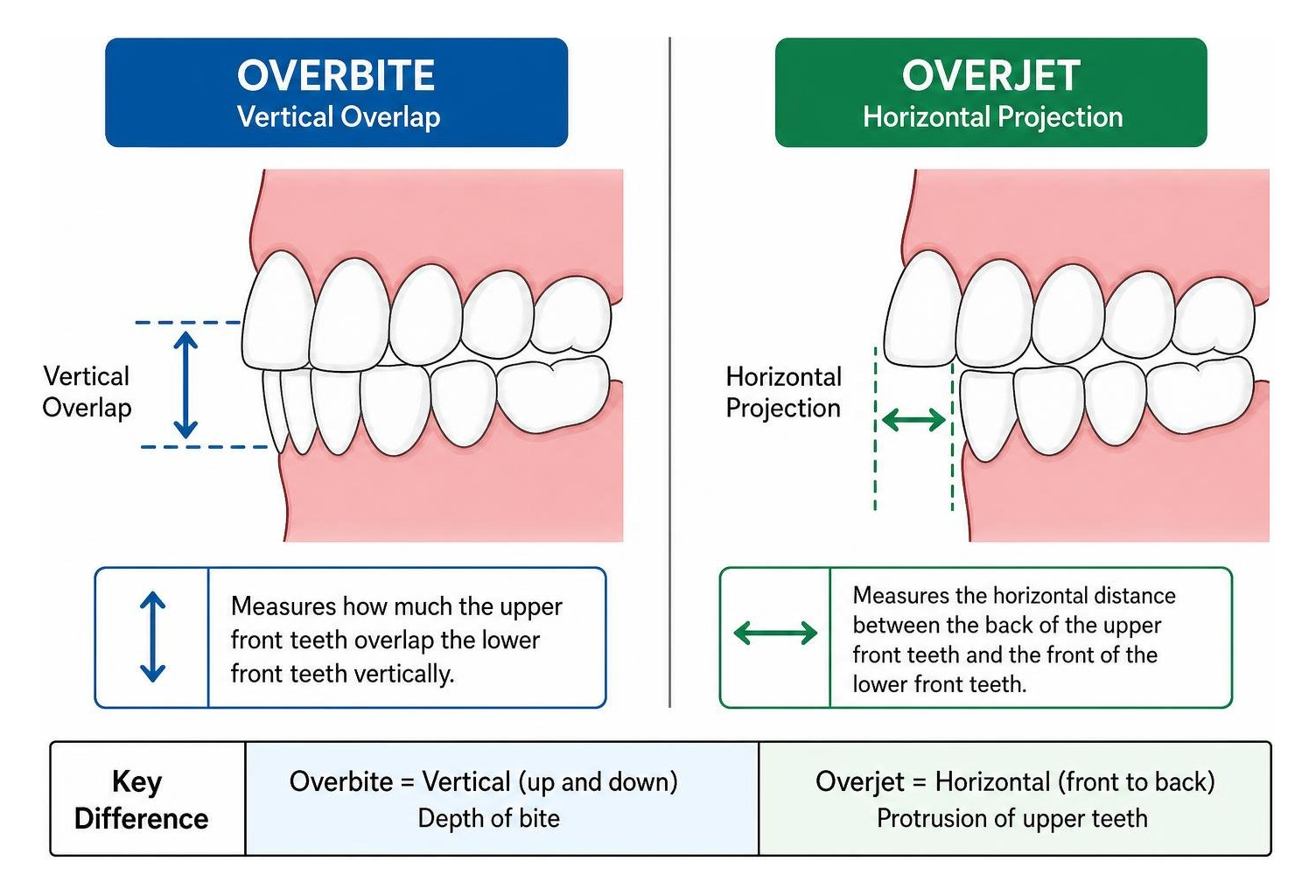
- Overbite (Vertical Overlap): Overbite measures the vertical downward overlap of the upper front teeth over the lower front teeth. If you bite down and your top teeth cover more than a third of your bottom teeth—or completely hide them from view—you have a deep vertical overbite.
- Overjet (Horizontal Projection): Overjet measures the horizontal distance between the front surface of the bottom teeth and the back surface of the top teeth. This is what people colloquially call “buck teeth,” where the upper front teeth stick outward diagonally toward the lip.
Here is a quick comparison table to keep the distinction crystal clear:
| Feature | Overbite (Deep Bite) | Overjet (Buck Teeth) |
|---|---|---|
| Primary Dimension | Vertical (Up and Down) | Horizontal (Front to Back) |
| Visual Appearance | Lower front teeth are partially or fully hidden | Upper front teeth protrude outward past the lip |
| Normal Range | 2 to 4 millimeters (10%–30% overlap) | 1 to 2 millimeters |
| Common Sensation | Lower teeth biting into the roof of the mouth or upper gums | Upper teeth protruding, lip incompetence |
| Main Health Risk | Severe enamel abrasion, TMJ pain, gum tissue trauma | Chipped front teeth during minor falls, lip trauma |
It is entirely possible to have zero overjet (meaning your teeth don’t stick forward horizontally at all) while suffering from a severe deep overbite where your lower teeth are buried behind your top teeth. To explore all treatment paths available to correct these distinct bite issues, you can learn more about orthodontics options.
Why Teeth Can Look Perfectly Straight Despite a Deep Overbite
How can teeth look picture-perfect from the front while hiding a functional structural problem? The answer lies in how our eyes perceive smile aesthetics versus how jaw mechanics actually function.
When you smile for a photo, you show the front surfaces (the facial plane) of your upper six teeth. If those teeth are uncrowded, evenly spaced, and upright, your brain registers the smile as “straight.” However, bite alignment operates in three dimensions:
- Transverse: Width of the arches.
- Sagittal: Front-to-back relationship.
- Vertical: Height and overlap relationship.
A person can have immaculate arch alignment in the front, but if their lower jaw sits slightly behind where it ideally should, or if the lower front teeth have erupted higher than normal (a clinical condition known as an exaggerated Curve of Spee), the upper teeth will drop down like a window shade over the lower arch.
From the front, the arch looks neat and smooth. But from a side profile or functional viewpoint, the upper teeth are acting as an enclosure, trapping the lower jaw in a backward position. This hidden malocclusion is precisely why cosmetic evaluation alone isn’t enough to assess your long-term oral health.
Causes and Health Risks of Misalignment Behind Straight Teeth

It’s easy to assume that if a smile looks great, it must be healthy. Unfortunately, bite physics don’t care about surface aesthetics. An untreated deep overbite places tremendous, uncoordinated stress on your teeth, jaw joints, and surrounding soft tissues every single time you chew, swallow, or clench your teeth.
What Causes Straight Teeth with an Overbite?
Why do some people develop straight teeth with a deep bite? The causes usually stem from a mix of genetic inheritance, environmental influences, and functional habits during early childhood development.
- Genetic Jaw Structure: Just as you inherit your eye color or height, you inherit the bone structure of your maxilla and mandible. If your genetics favor a strong upper jaw or a small, receded lower jaw, you can easily develop a skeletal deep bite even if your tooth buds erupt in an orderly line without crowding.
- Childhood Oral Habits: Prolonged thumb sucking, pacifier use past age 3, or excessive reliance on traditional valve-style sippy cups can alter the natural resting height of teeth and palate development. Sucking mechanics pull the cheeks inward and force the tongue low, altering proper arch relationship during crucial growth years.
- Tongue Thrusting & Low Tongue Resting Posture: A healthy resting posture involves the tongue pressing gently against the roof of the mouth behind the front teeth. If a low tongue posture or atypical swallowing pattern occurs, the upper arch loses internal structural support, allowing the upper front teeth to over-erupt downward.
- Airway Restrictions and Breathing Dynamics: Children who suffer from chronic nasal congestion, enlarged tonsils, or mouth breathing often drop their lower jaw down and back to open their airway. Over time, this chronic mouth-breathing posture alters facial growth, encouraging a deeper overbite. To learn how pediatric airway dynamics shape jaw development, explore pediatric airway orthodontics.
Health Complications of Leaving an Overbite Untreated
If your teeth look straight, you might be tempted to ask: “Why fix it if nobody notices?”
The reason isn’t cosmetic—it’s functional survival for your smile. Leaving a deep overbite uncorrected carries significant health risks over time:
- Excessive Enamel Erosion: In a deep overbite, the back surfaces of the upper front teeth constantly grind against the edges of the lower front teeth. Over years of chewing, this friction wears away protective enamel, leaving teeth shorter, translucent, chipped, or sensitive.
- Palatal Tissue Trauma & Gum Recession: In severe deep bite cases, the lower front teeth actually bite directly into the delicate soft tissue of the roof of the mouth (palatal tissue) or the gum line behind the upper teeth. This chronic impingement can lead to gum recession, painful inflammation, and localized periodontal damage.
- Temporomandibular Joint (TMJ) Strain: When the upper arch traps the lower jaw too far back, it compresses the delicate nerve and vascular network behind the TMJ disc. This can trigger chronic jaw popping, clicking, facial muscle fatigue, tension headaches, and neck stiffness.
- Increased Risk of Decay: Misaligned bite dynamics often make proper daily cleaning around the lower front teeth challenging. Furthermore, teeth that suffer enamel wear lose their protective outer shield, becoming significantly more vulnerable to decay.
- Sleep-Disordered Breathing: A lower jaw pushed backward by a deep overbite restricts the space available for the tongue. When sleeping on your back, the tongue easily falls backward into the airway, contributing to snoring or obstructive sleep apnea.
How Orthodontists Diagnose and Treat Overbites Without Traditional Braces
Diagnosing a bite issue behind a straight smile requires looking beneath the surface with advanced diagnostic tools. At Tribeca Dental Studio, our personalized approach to dentistry combines a warm, welcoming environment with modern technology to evaluate your bite comprehensively.
During an evaluation, we don’t just look at your teeth when you smile. We perform:
- 3D Digital iTero Scans: Capturing precise, 3D digital models of your upper and lower arches to analyze bite depth and contact points.
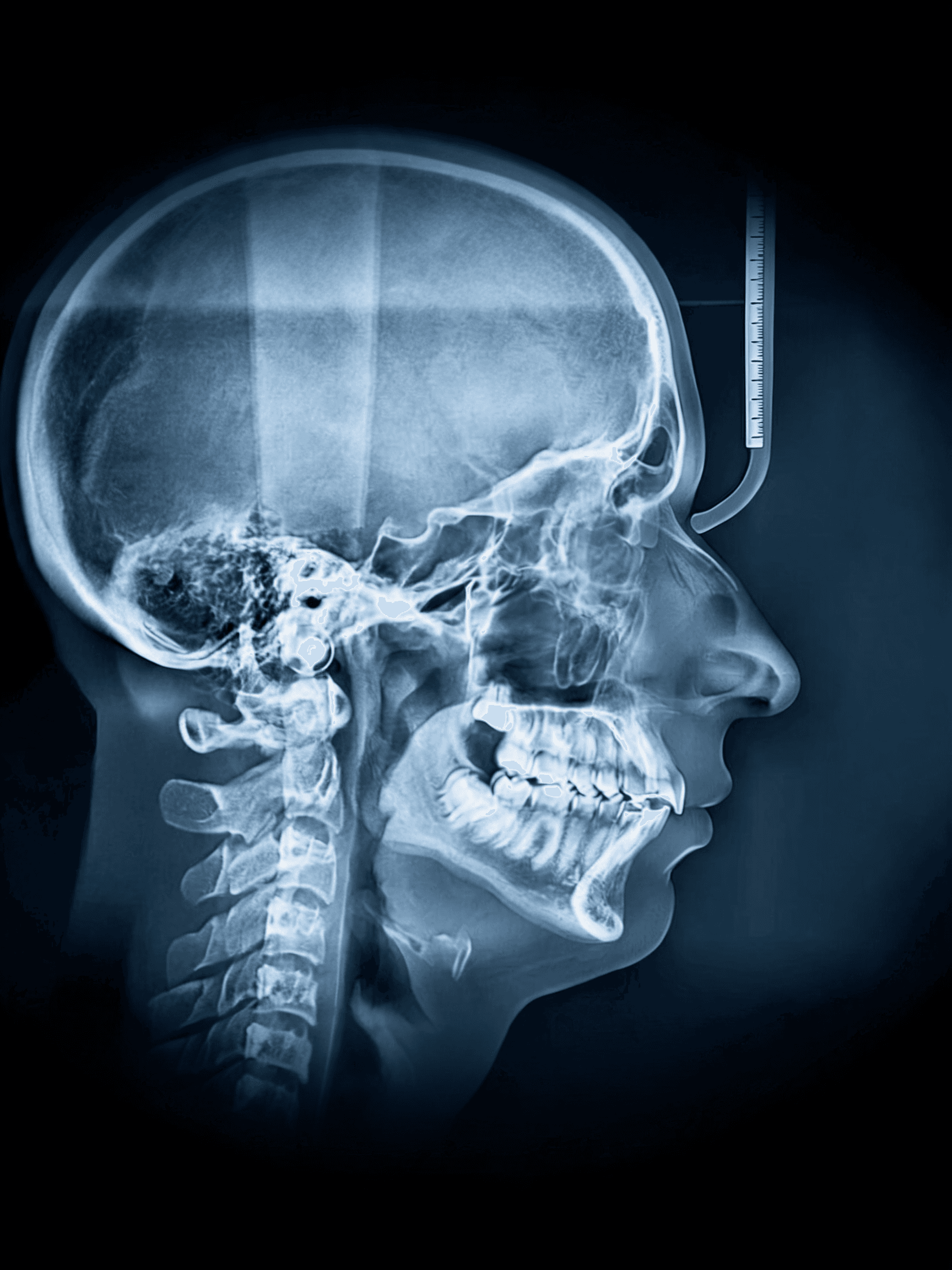
- Comprehensive Diagnostic X-Rays & Digital Panoramic Imaging: Assessing the relationship of your roots, jaw bone structures, and TMJ positioning.
- Physical Clinical & Airway Exam: Checking muscle strain, swallowing patterns, tongue mobility, and range of jaw motion.
Correcting Straight Teeth with an Overbite Using Clear Aligners
Many adults and teens who already have straight teeth dread the thought of spending two years wearing high-visibility metal brackets just to fix a bite issue. Fortunately, modern clear aligner technology—specifically Invisalign—has revolutionized overbite correction.
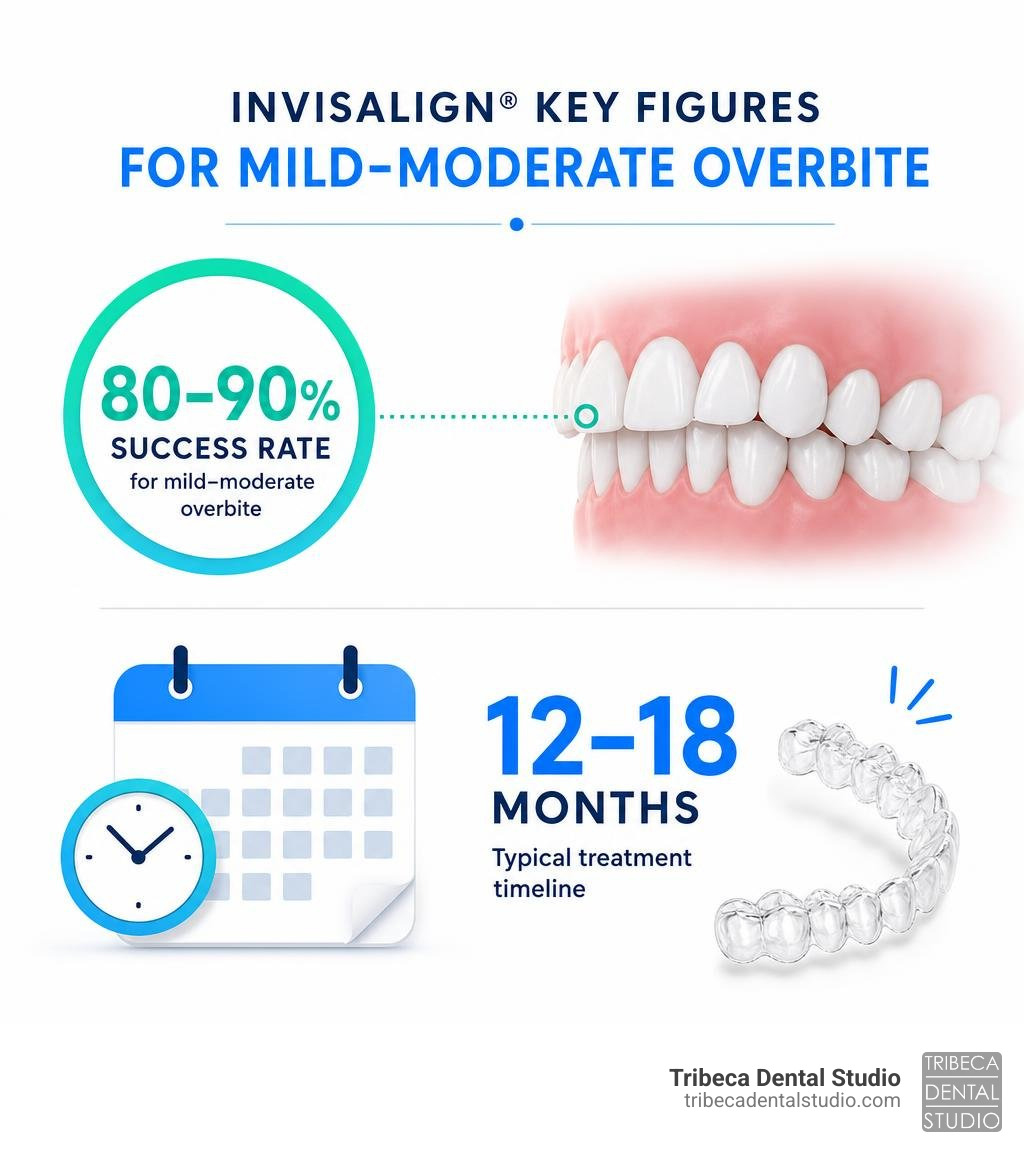
Can clear aligners really move an entire bite? Absolutely. Clinical research demonstrates that Invisalign achieves an impressive 80% to 90% success rate for correcting mild to moderate overbites.
Here is how clear aligners work their magic on a deep bite:
- SmartForce Attachments: Small, tooth-colored composite buttons are bonded to specific teeth. These act as discreet handles, allowing the custom aligner trays to apply targeted leverage.
- Precision Wings & Class II Elastics: For bite movement, small elastics connect from the upper clear aligner to the lower aligner. This gentle, continuous force slowly shifts the lower arch forward and guides the upper arch into optimal vertical harmony.
- Levelling the Curve of Spee: Aligners gradually push (intrude) lower front teeth slightly into the jawbone while pushing up back teeth (extrusion), leveling out the deep vertical overlap.

Timeline and Advantages
How long does it take? While severe skeletal issues may take longer, mild overbite cases treated with clear aligners can often be completed in under 12 months. Moderate cases average between 12 to 18 months, typically requiring approximately 24 sets of custom aligners.
In addition to aesthetics, clear aligners offer massive lifestyle advantages over traditional metal braces:
- 70% Less Pain: Clear aligners exert controlled, gradual forces, resulting in dramatically less soft-tissue irritation and soreness compared to wires and brackets.
- 40% Fewer Office Visits: Digital treatment planning means fewer emergency repair appointments for broken brackets or poking wires.
- 25% Lower Tooth Decay Risk: Because aligners are completely removable, you can brush and floss normally without navigating around metal hardware, preserving healthy gums and enamel throughout treatment.
If you are curious about clear aligner options for your smile, read about Invisalign treatment to see how custom digital planning transforms bite function.
Non-Surgical Treatment Options Beyond Traditional Braces
While clear aligners are ideal for many patients, our comprehensive team at Tribeca Dental Studio utilizes a wide spectrum of advanced techniques tailored to your specific anatomy and goals.
- Airway Orthodontics: Focuses on expanding narrow arches and opening upper nasal passages, allowing the lower jaw to shift into a natural, healthy forward posture naturally. To understand how airway-focused treatment benefits patients of all ages, discover airway orthodontics guide.
- Palatal Expansion (MSE / MARPE): For adults or growing teens with narrow upper arches, Maxillary Skeletal Expansion expands the roof of the mouth non-surgically, freeing up room for the lower jaw to come forward out of a deep bite trap.
- Myobrace and Myofunctional Therapy: Specialized oral appliances combined with breathing and tongue retraining help children re-establish natural jaw alignment by correcting low tongue posture and mouth breathing early in life.
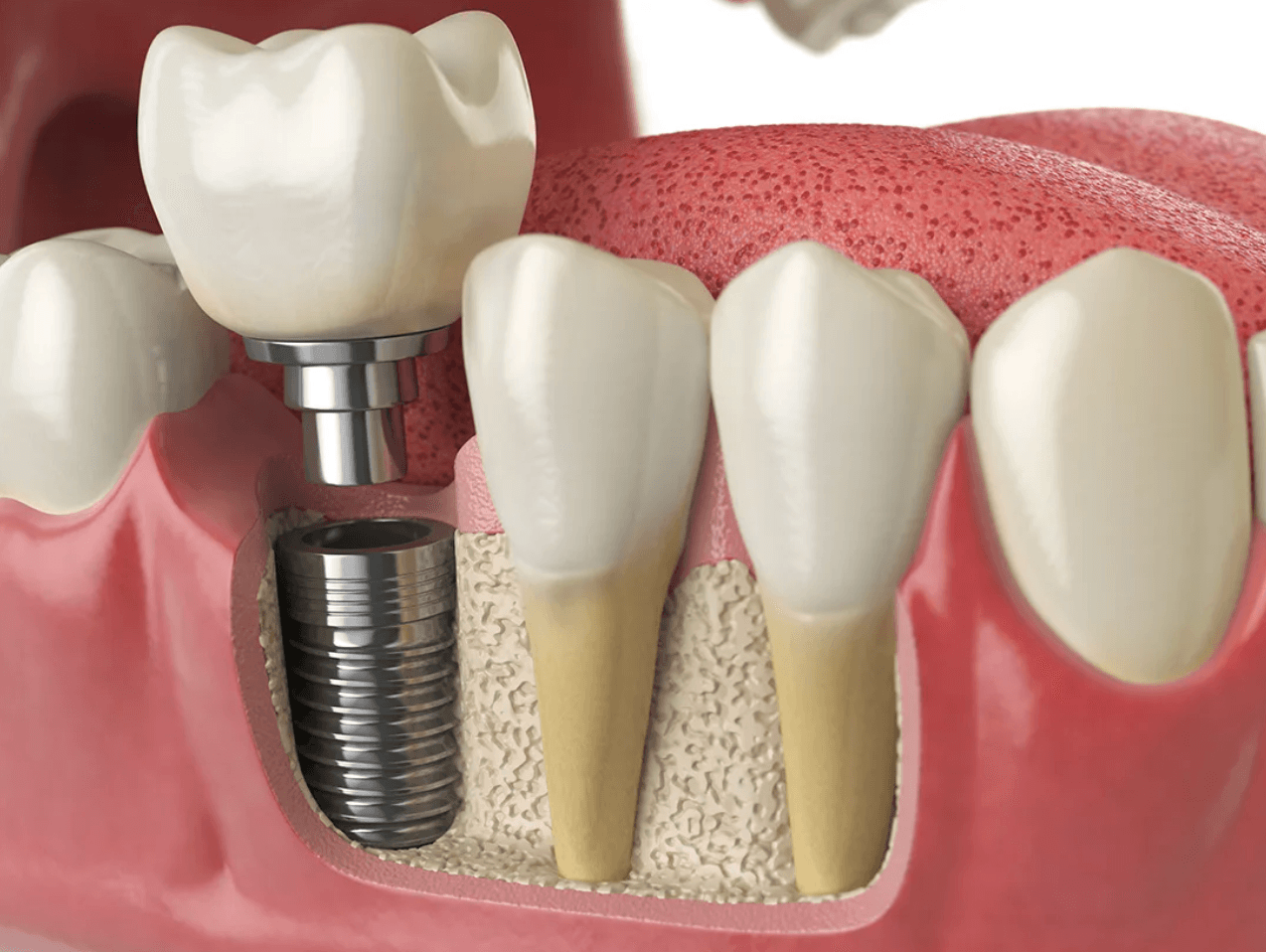
- Restorative Smile Rebuilding: In cases where deep overbites have caused significant enamel erosion, our practice integrates full-mouth reconstruction using custom dental crowns or conservative restorations.
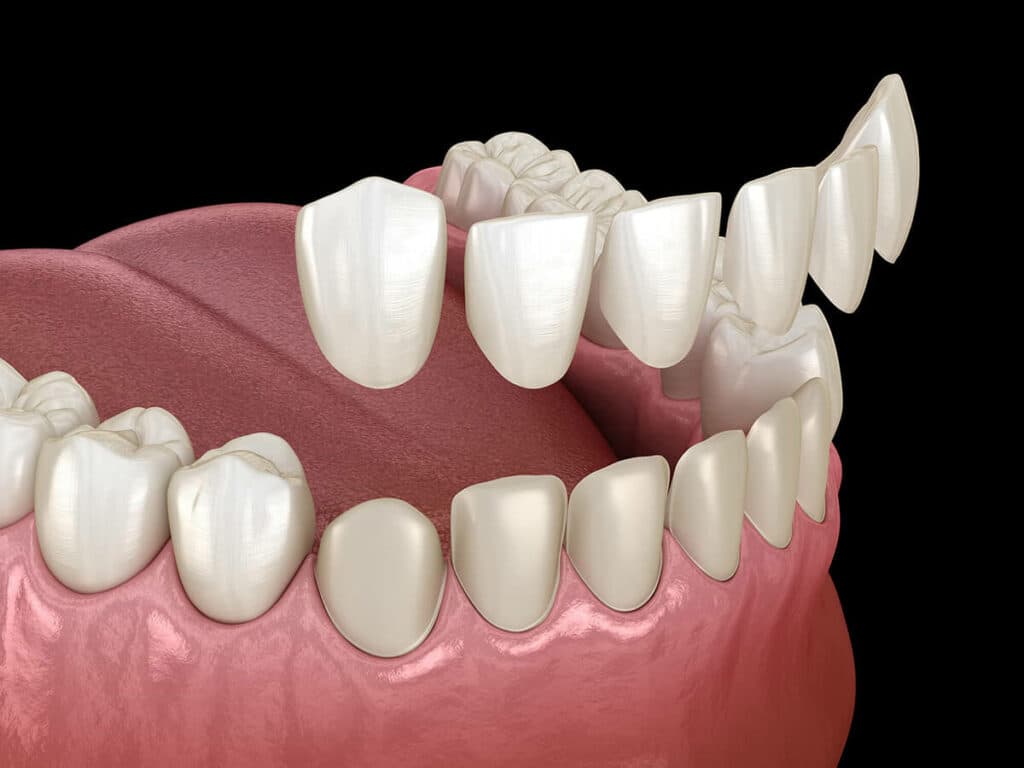
Our team, led by Dr. Nina Izhaky alongside periodontist and implant specialist Dr. Sam Morhaim, excels at combining orthodontic bite correction with best-in-class restorative and cosmetic solutions. In addition to advanced orthodontic guidance, Tribeca Dental Studio is widely recognized for conservative smile design, excelling in no-prep veneers in NYC. No-prep veneers allow us to enhance shape and aesthetics with minimal alteration to your natural enamel once bite mechanics are properly stabilized.
Prevention Strategies for Children with Straight Teeth
Can an overbite be prevented in children whose teeth are erupting straight? While inherited bone structure cannot be altered without orthodontic guidance, habit modification in early childhood plays a critical role in preventing bite worsening:
- Limit Pacifier Use and Thumb Sucking: Discourage thumb sucking and eliminate pacifier use by age 3 to prevent structural deformation of the growing jaw.
- Ditch Valve Sippy Cups: Spill-proof valve sippy cups require continuous, forceful suction that mimics thumb sucking. Transition children directly to open cups or 360-degree rimmed training cups.
- Encourage Nasal Breathing: Monitor your child for chronic mouth breathing, loud snoring, or sleeping with an open mouth. Early nasal airway intervention keeps jaw growth on track.
- Schedule an Early Orthodontic Evaluation: The American Association of Orthodontists recommends every child receive an orthodontic evaluation by age 7. Catching deep bite tendencies early makes correction far easier while jaw bones are still malleable.
To keep track of your child’s dental growth, review these 5 signs your child might need braces.
Frequently Asked Questions About Overbites and Bite Alignment
Is surgery always required to fix a severe overbite in adults?
No, surgery (orthognathic jaw surgery) is not required for most adults with an overbite. Surgery is typically reserved for severe skeletal overbites where there is a massive structural discrepancy between the upper and lower jaw bones.
For severe skeletal overbites in adults, success with Invisalign alone drops below 50%, which is why an expert diagnostic evaluation is essential. However, for the vast majority of mild-to-moderate dental or mild skeletal deep bites, non-surgical treatment using clear aligners combined with elastics, palatal expansion, or specialized orthodontic mechanics achieves excellent functional and visual results.
Can clear aligners fix an overbite without altering front tooth appearance?
Yes! If you already love the straight appearance of your front teeth, your orthodontic plan can be specifically engineered to maintain their arch alignment while shifting their vertical height and the overall bite relationship.
By utilizing precision attachments, micro-adjustments, and Class II elastics, clear aligners can elevate back teeth or slightly intrude front teeth to reduce overbite depth without introducing unwanted gaps, crowding, or unwanted changes to your front smile line. In fact, normalizing your bite depth often improves facial profile support, relieving chin strain and preventing premature facial collapsing as you age.
How long does overbite correction usually take for adults?
The exact timeline depends on the complexity of the bite depth and how consistently you wear your aligners:
- Mild Cases: Can often be completed in 6 to 12 months.
- Moderate Cases: Typically take between 12 to 18 months, requiring around 24 tray sets.
- Severe Cases: May require 18 to 24 months of multi-disciplinary orthodontic care.
Aligner wear compliance is the key to staying on schedule: aligners must be worn for 20 to 22 hours per day, removed only for eating, drinking non-water beverages, and daily oral hygiene routines.
Conclusion
Having straight teeth with an overbite can feel like a mystery, but understanding the difference between how your smile looks and how your jaws work is the key to protecting your teeth for a lifetime. Straight front teeth are wonderful, but a deep bite underneath can quietly cause enamel erosion, TMJ headaches, gum irritation, and long-term joint strain if left unaddressed.
At Tribeca Dental Studio in NYC, Dr. Nina Izhaky and our expert team treat every patient like family. We pride ourselves on offering comprehensive, state-of-the-art care under one roof—from advanced digital bite mapping and clear aligner therapy to airway orthodontics, full-mouth restoration, and conservative no-prep veneers.
You don’t have to choose between a straight smile and a comfortable bite—you can have both! If you’re ready to protect your enamel and ensure your jaw mechanics feel as great as your smile looks, schedule an orthodontic evaluation at Tribeca Dental Studio today. We look forward to welcoming you into our warm Tribeca practice!